A few weeks ago, one of my colleagues at JUXT gave a presentation on Helm, and this started me thinking back over my own experiences with the tool. It appears I already had a lot to say on the subject back in 2018! Since then, I’ve made extensive use of Helm at CloudBees where we had an umbrella chart to deploy the entire SaaS platform, and at R3. It’s that latter experience that I’m going to talk about in this post.
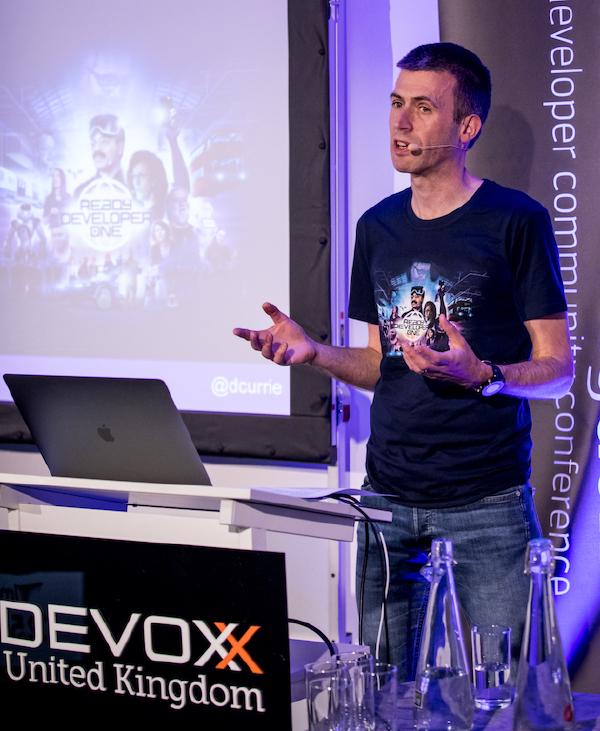
I presented an introduction to Knative at Devoxx UK, the recording for which can be found below. I’m afraid I deviated somewhat from the abstract given the changes to the project in the five months since I submitted it. With only half an hour, I probably shouldn’t have tried to cover Tekton as well but I wanted to have an excuse to at least touch on Jenkins X, however briefly! The demo gods largely favoured me except when hey failed to return (not the part of the demo I was expecting to fail!). The script and source for the demo are on GitHub although I’m afraid I haven’t attempted to abstract them away from the Docker Hub/GCP accounts.
I’ve spent the last few days trying to debug an issue on Kubernetes with an external plugin that I’ve been writing in Go for Prow. Prow’s hook component is forwarding on a GitHub webhook and the plugin mounts in various pieces of configuration from the cluster (the Prow config, GitHub OAuth token and the webhook HMAC secret). As a consequence, running the plugin standalone in my dev environment is tricky, but just the sort of scenario that Telepresence is designed for.
Last week I was out in San Francisco at Oracle Code One (previously known as JavaOne). I had to wait until Thursday morning to give my session on “Continuous Delivery to Kubernetes with Jenkins and Helm”. This was the same title I presented in almost exactly the same spot back in February at IBM’s Index Conference but there were some significant differences in the content.
Returning to the 101 ways to create Kubernetes configuration theme, next up is ksonnet from the folks at Heptio. (I have no doubt that there are 101 ways to create Kubernetes configuration but I’m afraid I don’t really intend to cover all of them on this blog!) ksonnet has a different take yet again from Helm and kustomize. In many ways, it is more powerful than either of them but that power comes at the cost of a fairly steep learning curve.
A short post for today but it relates to a tool that every Kubernetes user should have in their toolbox: kail. Although most users probably know that kubectl logs will, by default, show the logs for all containers in a pod and that it has --tail and -f options, fewer probably know that is has a -l option to select pods based on label. Kail takes tailing Kubernetes logs to a whole new level.
Finally, I get to write that blog post on kustomize! kustomize is yet another tool attempting to solve the problem of how to make Kubernetes configuration re-usable. Unlike, say, Helm, kustomize allows configuration to be overridden at consumption time without necessarily having allowed for it when the configuration was originally produced. This is great if you are attempting to re-use someone else’s configuration. On the flip-side, you might prefer to use something like Helm if you actually want to limit the points of variability e.g. to ensure standardization across environments or applications.
Having written a post on Helm, I feel obliged to follow it up with one on Helmfile, a project that addresses some of the issues that I identified with deploying multiple Helm charts. In particular, it provides an alternative approach to the umbrella chart mechanism that Jenkins X uses for deploying the set of charts that represent an environment.
I wanted to take a look at ksonnet and kustomize but felt I should write about what I know best first, and that’s Helm. All three tools are trying to tackle the same basic problem: enabling the re-use of Kubernetes configuration where typically we want some level of customisation each time we use the configuration, whether that’s to reflect the latest deployment or the environment we’re deploying to.
Next on the list of projects utilised by Jenkins X (and this is a theme that could run and run) is Google’s Skaffold. There is an intersection between the capabilities of Skaffold and Draft. Skaffold does not provide anything like packs (this is where Jenkins X uses Draft) so you need to provide your own Dockerfile and Kubernetes configuration (raw YAML, kustomize templates, and Helm charts are supported). Both projects, however, aim to simplify the process of building an image and deploying it to a Kubernetes cluster to speed iterative development of applications that have hard dependencies on a Kubernetes environment, or the services running therein.
Continuing on the theme of technologies used by Jenkins X under the covers, this post is going to take a look at ksync. In Jenkins X, this project is used to implement the ‘DevPods’ capability. It’s a pretty thin veneer over the top of what is provided by ksync though. As the name suggests, the project performs synchronisation, in particular, bi-directional synchronisation between a directory on your laptop and a pod in a Kubernetes cluster. The aim is to allow you to code locally in your favourite editor but run that code in-cluster where you have access to a full Kubernetes environment, including any other services you might be running.
For my next few posts, I thought I’d pick on some of the technologies that Jenkins X uses under the covers. The first of these is Draft, originally from Deis but it went with them to Microsoft. Draft’s aim is to streamline the process of developing code that runs on Kubernetes. It’s evolved a bit since it was originally released: having started with a client-server architecture, it is now entirely client based. There are many good reasons for this although one of the things that differentiated Draft originally was that it didn’t need anything on the developer’s machine other than Draft itself: not even Docker.
Having started to get some rhythm back in to the publishing of my personal blog posts, I thought it was about time that I started posting some technical content again too. I’m having to do lots of new learning at the moment and, if nothing else, writing about it makes sure that I’ve understood it and helps me remember at least some of what I’ve learnt. As before, these posts in no way indicate the position of my employer nor, in general, should you read in to them anything about technical direction. On the whole, they are just about topics that I’ve found sufficiently interesting to write a little about. There is, I have found, no knowing what will be of interest to other people (my all-time top post relates to Remote Desktop!). From an entirely selfish perspective, I don’t care if anyone reads what I write as it’s largely the writing that gives me value!
IBM launched a new conference in San Francisco under the name Index and I was lucky enough to attend. This wasn’t your usual IBM conference focused on brands and products. Although the tracks were aligned with IBM’s strategic areas (Cloud, Blockchain and AI talks were much in evidence, for example) it really was a developer conference with keynotes and speakers from well-renowned figures across the industry.
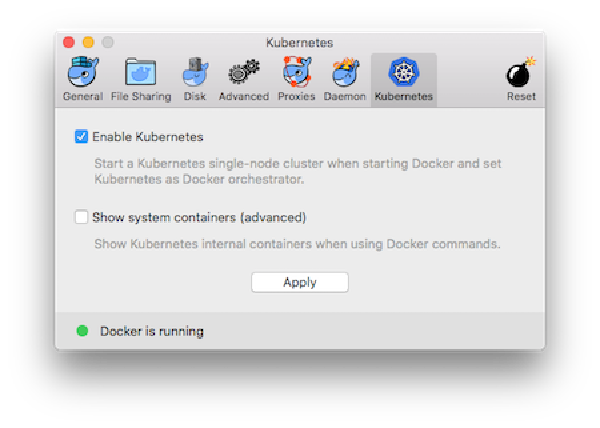
My focus for the last 18 months having been on deployment to Kubernetes, I was excited to hear the news back at DockerCon that Docker Inc were recognising the dominance of Kubernetes. This included adding support to Docker Enterprise Edition (alongside Swarm) and to Docker for Mac/Windows. The latter has now hit beta in the edge channel of Docker for Mac and the following are my first impressions.
The sample for Microservice Builder is intended to run on top of the Microservice Builder fabric and also to utilize the ELK sample. As such, the Kubernetes configuration for the microservice pods all bind to a set of resources (secrets and config-maps) created by the Helm charts for the fabric and ELK sample. The slightly annoying thing is that the sample would work perfectly well without these (you just wouldn’t get any logging to the ELK stack) only, as we shall see in a moment, deployment fails if the fabric and ELK sample have not already been deployed. In this post we’ll explore a few possibilities as to how these resources could be made optional.
As I posted here on the Microservice Builder beta, I thought it only fair that I should offer an update now that it is Generally Available. There is already the official announcement, various coverage in the press including ZDNet and ADT, a post from my new General Manager Denis Kennelly, and, indeed, my own post on the official blog, so I thought I’d focus on what has changed from a technical standpoint since the beta.