For a while now I’ve had a bullet point on a chart that blithely stated that you could add an application on top of our WebSphere Application Server traditional Docker image using wsadmin and, in particular, with the connection type set to NONE i.e. without the server running. Needless to say, when I actually tried to do this shortly before a customer demo it didn’t work! Thankfully, with moral support from a colleague and the excellent command assistance in the admin console, it turns out that my initial assertion was correct and the failure was just down to my rusty scripting skills. Here’s how…
Looking for solutions to my archive extraction problem brought me to look at the Rocker project from Grammarly. I’d looked at it before but not in any great detail. In a nutshell, it aims to extend the Dockerfile syntax to overcome some of its current limitations. Although not an option for me (because I can’t depend anything beyond the standard Docker toolset) the Rocker solution to my earlier problem would be as simple as follows:
The way we build our WebSphere traditional Docker images is as a two-step process. First we install the products using Installation Manager and generate a tar file containing the installed product. Then we suck that tar file in to a clean image so that the resulting image does not contain all the cruft left lying around from the install process. (Not including Installation Manager in the final image also helps to reinforce that these images are intended to be immutable.)
The lifetime of a Docker container is tied to the lifetime of the PID 1 process executed when the container was started. WebSphere Liberty has a convenient server run command to run the application server in the foreground. Sadly, that’s not the case with the traditional WebSphere’s startServer.sh script which simply starts the server process in the background and then exits. To ensure that the container didn’t exit as well, we started out with a script something along the following lines:
On Friday I attended my third Container Camp UK. The venue had changed once more, this time taking up residence in the Picturehouse Central cinema by Piccadilly Circus. As with last year, this meant comfy seats which, contrary to what you might think, actually makes it easier to stay awake! In another repeat from 2015, we started late and connecting to the projector proved problematic throughout the day. This time we had a selection of shiny MacBooks with their new-fangled USB-C connectors to thank!
The films on my flight to the US this week weren’t much to write home about so I ploughed through some of my Safari Queue backlog. Two of the Docker related books on my queue were from Packt Publishing.
Scaling up # In the first two posts in this series we covered the basics of starting a WebSphere Liberty on IBM Containers via the browser and then using the command line to deploy an application.
Deploying an Application # In the first part of this series we looked at how to get started running a WebSphere Liberty image in IBM Containers using the Bluemix console. The container was just running an empty Liberty server. In this post we’ll look at building and deploying an image that adds an application. I was originally intending to stick to using the browser for this post but I think it’s actually easier to do this from the command line. I’m going to assume that you already have Docker installed locally, either natively on Linux, via Docker Machine, or via the Docker for Mac/Windows beta.
I’ve been lucky enough to spend the past two days in the presence of Robert C. Martin a.k.a. Uncle Bob for his Clean Code workshop at Skills Matter in London. I arrived at the very last-minute having decided to try out a Santander Cycle for the first time, only to discover that the promised docking station next to Code Node has disappeared under road works.
It was another early start on Day 2 of the conference. It’s not often I leave the hotel before breakfast starts, but fortunately breakfast was being served in the expo hall so I could refuel whilst on duty.
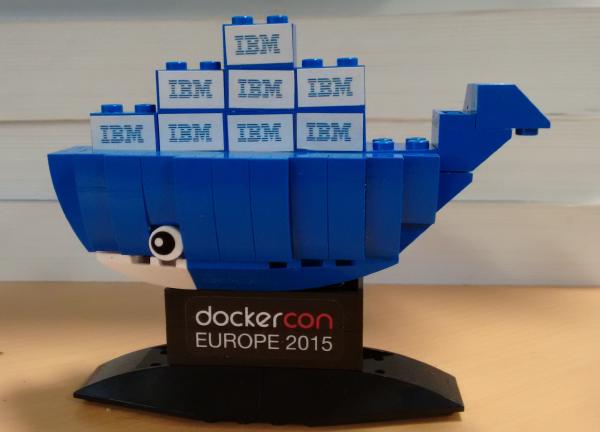
I was lucky enough to be a part of the IBM contingent attending last week’s DockerCon Europe in Barcelona. I had to earn my keep by manning the Code Rally game on the IBM booth (not to mention lugging a suitcase full of laptops to the event and porting the server-side of the game to run on IBM Containers). I did get to attend the sessions though and soak up the atmosphere.
Work took me to Rome at the end of this week, facilitating a code retreat for some of my colleagues at the local IBM lab. The retreat itself followed a format we’ve used numerous times before with a focus on pairing and TDD although for the first time we also introduced a session on BDD. Starting with a plain English (or Italian) description really did seem to help the participants avoid starting with a focus on the details of the implementation. The experience also made me realise how much you are dependent on being able to understand the communication between a pair when trying to coach them!
I’ve gone a bit meetup happy in the past two weeks. Last week I headed along to the Pivotal offices in London for the first London Cloud Foundry User Group meetup organised by one-time colleague Duncan Winn. First to speaker was another ex-Hursley employee, Glyn Normington. He gave a fascinating presentation in to the work that he and his colleagues are doing to replace the backend of Cloud Foundry’s Warden container with libcontainer (now split out from Docker). More on this over on Glyn’s blog.
Yesterday evening I headed up to the London PaaS User Group meeting as there were two Cloud Foundry related sessions on the agenda. First up was David Laing talking about the open source Logsearch project, a bosh deploy of an Elastic search ELK log analysis cluster. His employer (City Index) has this hooked up to Cloud Foundry system logs and, in some cases, they’re also using it for analysis of application logs with addition parsers. They’re looking for people to get involved in the project and help with the next phase: anomaly detection. One major hole in the solution as it currently stands: it’s only suitable for private PaaS as their is no access control over the logged data.
I’m using some vacation to catch up on a few blog posts (which I’m going to shamelessly back-date). The end of July saw the last in SOC’s Summer Series of events which was notable for a) actually feeling like Summer unlike most of the other events in the series, b) being on a new area: the IBM site at Hursley and c) being organised by me! Simon Bevan had done a great job of the map, building on some initial work by Charlie Richardson. Given the lack of traffic on the day, I think I had been overly cautious in marking all of the car parks as out of bounds which limited the shape of the courses. On the day, I also spotted a couple of places where I’d been a little careless with the overprint that meant route choices weren’t as clear as they should have been.
I haven’t posted anything product related since the release of WebSphere ESB 7.5 in June last year where I hinted at pastures new. Those of you that I’m connected to on LinkedIn will know that I subsequently became Technical Lead for a product called WebSphere Appliance Management Center. WebSphere Appliance Management Center provides off-box management and monitoring of multiple WebSphere DataPower SOA appliances. The development for the management component of the product moved to Hursley shortly after the initial release (named 4.0 after the coincident firmware release). The new team put together a fix pack later in the year which delivered support for the new Service Gateway XG45 appliance.
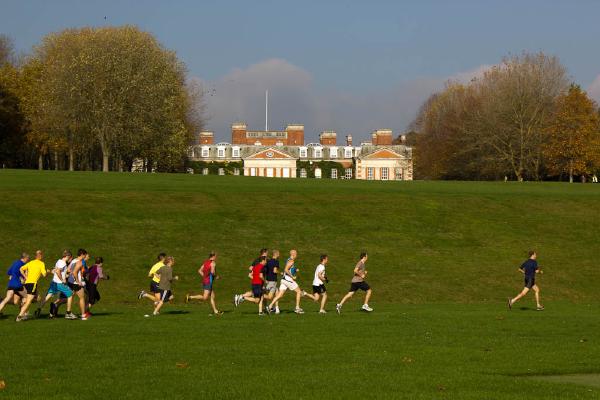
I’m going to be upfront - I’m about to do some gross back-dating of posts. This post is actually being written in January 2012 as I’ve been hopeless at blogging in the last couple of months of 2011 - not helped by having to re-instate a months worth of posts from Google’s cache when an enforced AWS reboot seemed to send my image back in time. Don’t expect volumes of text though: just a few words and an excuse to link to some photos. The one’s about the running race that I organised at work as part of the inter-departmental games. It was three laps adding up to (approximately) 5km. There was a good turnout, helped by the . I got a bit of stick for being too far out in front although still took 19:15 (the course did have a few hills). It actually transpired that I wasn’t far enough ahead as, having applied the World Masters 5k grading (my rules), I actually ended up back in 4th place. One way to look at it is that I don’t need to get faster - I just need to get older and not get slower! Andy Piper did a nice write-up on eightbar.
WebSphere ESB 7.5 is generally available from Passport Advantage as of today (as are WSRR 7.5, WebSphere ESB Registry Edition 7.5 and the 7.5 BPM stack) and the InfoCenter is also live. Having been the Development Lead and then Release Architect, I feel a certain sense of parental pride in this delivery but, as always, the credit goes to the wider team. It shall also be my last as I am parting company with the WebSphere ESB development team and moving on to pastures new. I can’t say more at the moment but all will be revealed sometime this month.
A quick post to highlight that I’m in Düsseldorf this week as a last minute stand-in for my colleague Simon Holdsworth at the WebSphere Technical Conference. I’ll be giving his Introduction to WebSphere ESBand WebSphere ESB Best Practices and Performance Recommendations on Tuesday afternoon, What’s New in WebSphere ESB V7.0on Wednesday and then running the WebSphere ESB Birds of a Feather session that follows. I’ll also be at the Connectivity Panel Q&A on Monday afternoon which is probably the best place to catch me if you’d like to meet up at some point for a chat about the product or just to say Hi!
On Saturday we took Emma to see Santa in the clubhouse at work (obviously where he hangs out at weekends). There was a bit of a queue but the guys had done a good job of providing entertainment once you made it in to Santa’s grotto: snowing Christmas trees, dancing Santas - that sort of thing. Emma’s favourites were the toy trains. Unfortunately, when the moment came to meet the big man Emma’s nerves kicked in and she just cowered behind me.