Another SOC website related posting - this time on the subject of backup. The website is backed up by the club’s current hosting provider (Krystal - who, a year in, I can highly recommend) but I was informed that the club had bought a large quantity of cloud storage for the purpose of storing its map archive and, for belt and braces, it made sense to also include backups of the website there.
For my sins, I have now been involved in the management of our orienteering club’s current website for over 10 years now. Back then, we wanted to make it as easy as possible for club officials and members to contribute content and, after evaluating WordPress, Joomla! and Drupal, we went with Drupal as our Content Management System. The extensibility of Drupal makes it immensely powerful but, as with many open source projects, the rich ecosystem of contributed modules can be both a blessing and a curse.
It was another two day’s of racing this weekend. On Saturday BAOC had an urban race around Winchester based at Peter Symonds college. Christine was resting her knee so it was just the children and myself competing. Their courses were confined to the college grounds with Duncan finishing 5th M12- and Emma 3rd W12- (although they were running the same course and Duncan actually beat Emma).
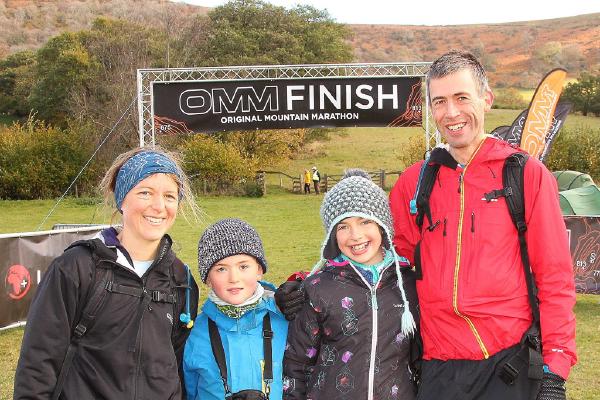
Last weekend it was the OMM in the Black Mountains, South Wales. Christine’s parents had offered to mind the children so Christine and I were running the Medium Score together. There was a biting wind but blue skies as we set off on Saturday morning. There was some early indecision but we soon settled down to a steady mountain marathon pace. As the morning went on, the skies started to look increasingly ominous and, as we cross one bit of particularly bleak hillside, the snow began and persisted for long enough to paint the mountainside white. We reached the campsite with around twenty minutes to spare - not long enough to have fitted anything else in.
Last week I was out in San Francisco at Oracle Code One (previously known as JavaOne). I had to wait until Thursday morning to give my session on “Continuous Delivery to Kubernetes with Jenkins and Helm”. This was the same title I presented in almost exactly the same spot back in February at IBM’s Index Conference but there were some significant differences in the content.
Returning to the 101 ways to create Kubernetes configuration theme, next up is ksonnet from the folks at Heptio. (I have no doubt that there are 101 ways to create Kubernetes configuration but I’m afraid I don’t really intend to cover all of them on this blog!) ksonnet has a different take yet again from Helm and kustomize. In many ways, it is more powerful than either of them but that power comes at the cost of a fairly steep learning curve.
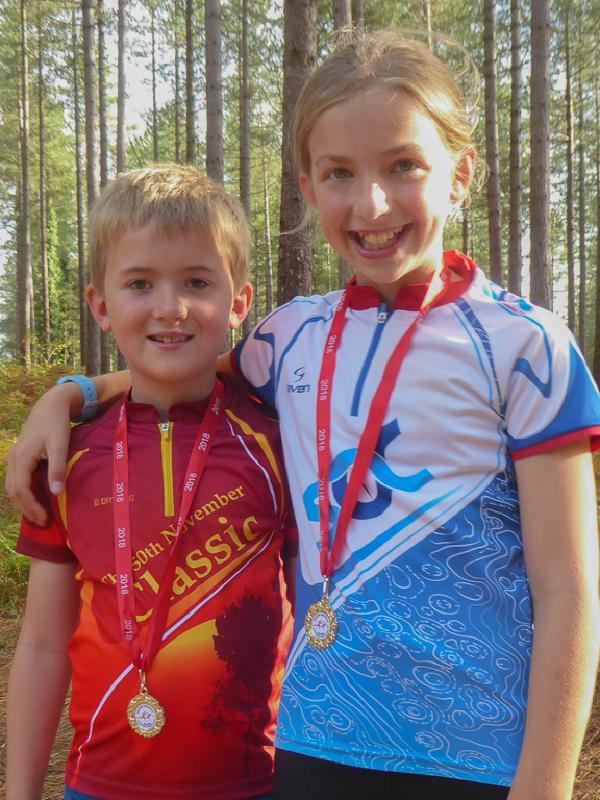
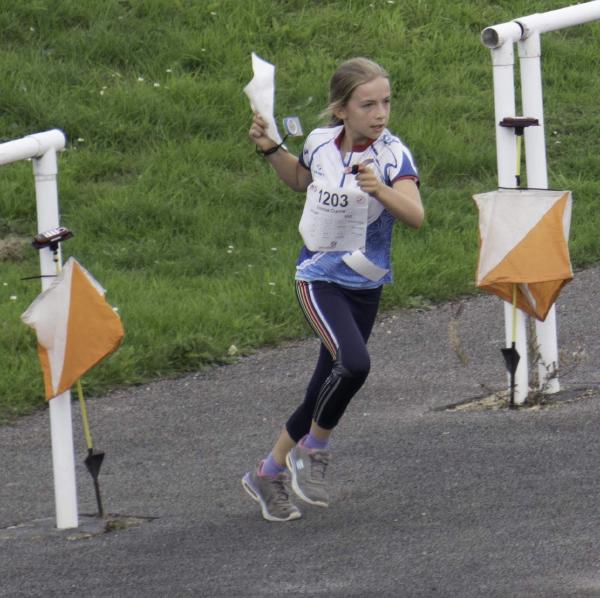
Today we were down at the British Schools Orienteering Association Score Champs, taking place at Moors Valley Country Park. It was a lovely day to be out in the forest (particularly compared with Friday’s weather). This was the first score event that Emma and Duncan have done on their own and the game plan was simply for them to head around the loop of white-standard controls, picking up a few others on their way. They both executed on this and, despite (or perhaps because) of being back well inside the 45-minute time limit, won their respective courses. (Duncan ran up as the event starts at Year 5.) Prizes were presented by Gillian Cross, author of the Demon Headmaster series, and member of the organising club. Results and more pictures can be seen on the British Schools Orienteering Association website. We won’t be travelling up to the non-score Champs in Blackburn later this year but nearby BADO are due to host the event in 2019…
A short post for today but it relates to a tool that every Kubernetes user should have in their toolbox: kail. Although most users probably know that kubectl logs will, by default, show the logs for all containers in a pod and that it has --tail and -f options, fewer probably know that is has a -l option to select pods based on label. Kail takes tailing Kubernetes logs to a whole new level.
Finally, I get to write that blog post on kustomize! kustomize is yet another tool attempting to solve the problem of how to make Kubernetes configuration re-usable. Unlike, say, Helm, kustomize allows configuration to be overridden at consumption time without necessarily having allowed for it when the configuration was originally produced. This is great if you are attempting to re-use someone else’s configuration. On the flip-side, you might prefer to use something like Helm if you actually want to limit the points of variability e.g. to ensure standardization across environments or applications.
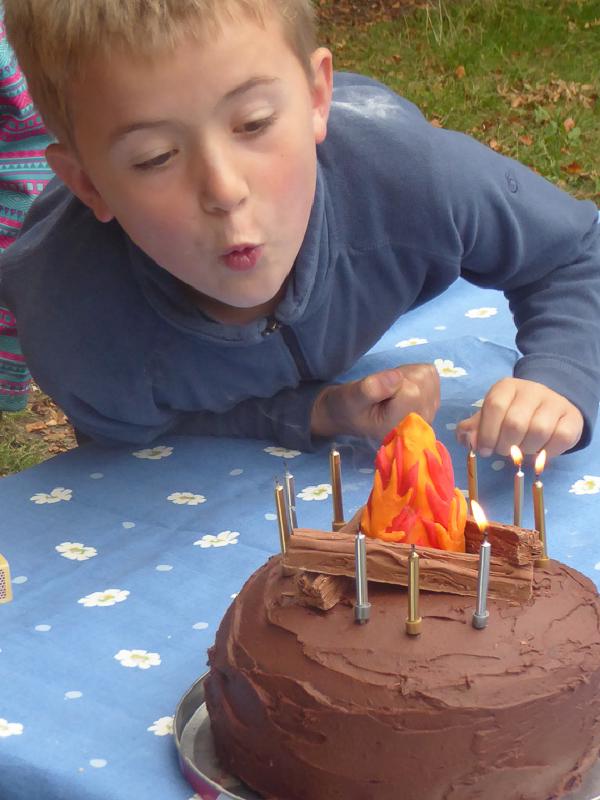
Lest this blog become entirely about technology: it was Duncan’s 9th birthday last week. His party took place the weekend before and, given it was up at Farley Mount and all outdoors, the weather was very kind to us. Emma and I laid out a hash whilst Christine and Duncan waited for ’the boys’ to arrive. We returned to find a game of capture the flag (a Cub favourite) well underway.
Having written a post on Helm, I feel obliged to follow it up with one on Helmfile, a project that addresses some of the issues that I identified with deploying multiple Helm charts. In particular, it provides an alternative approach to the umbrella chart mechanism that Jenkins X uses for deploying the set of charts that represent an environment.
I wanted to take a look at ksonnet and kustomize but felt I should write about what I know best first, and that’s Helm. All three tools are trying to tackle the same basic problem: enabling the re-use of Kubernetes configuration where typically we want some level of customisation each time we use the configuration, whether that’s to reflect the latest deployment or the environment we’re deploying to.
Next on the list of projects utilised by Jenkins X (and this is a theme that could run and run) is Google’s Skaffold. There is an intersection between the capabilities of Skaffold and Draft. Skaffold does not provide anything like packs (this is where Jenkins X uses Draft) so you need to provide your own Dockerfile and Kubernetes configuration (raw YAML, kustomize templates, and Helm charts are supported). Both projects, however, aim to simplify the process of building an image and deploying it to a Kubernetes cluster to speed iterative development of applications that have hard dependencies on a Kubernetes environment, or the services running therein.
Continuing on the theme of technologies used by Jenkins X under the covers, this post is going to take a look at ksync. In Jenkins X, this project is used to implement the ‘DevPods’ capability. It’s a pretty thin veneer over the top of what is provided by ksync though. As the name suggests, the project performs synchronisation, in particular, bi-directional synchronisation between a directory on your laptop and a pod in a Kubernetes cluster. The aim is to allow you to code locally in your favourite editor but run that code in-cluster where you have access to a full Kubernetes environment, including any other services you might be running.
For my next few posts, I thought I’d pick on some of the technologies that Jenkins X uses under the covers. The first of these is Draft, originally from Deis but it went with them to Microsoft. Draft’s aim is to streamline the process of developing code that runs on Kubernetes. It’s evolved a bit since it was originally released: having started with a client-server architecture, it is now entirely client based. There are many good reasons for this although one of the things that differentiated Draft originally was that it didn’t need anything on the developer’s machine other than Draft itself: not even Docker.
Having started to get some rhythm back in to the publishing of my personal blog posts, I thought it was about time that I started posting some technical content again too. I’m having to do lots of new learning at the moment and, if nothing else, writing about it makes sure that I’ve understood it and helps me remember at least some of what I’ve learnt. As before, these posts in no way indicate the position of my employer nor, in general, should you read in to them anything about technical direction. On the whole, they are just about topics that I’ve found sufficiently interesting to write a little about. There is, I have found, no knowing what will be of interest to other people (my all-time top post relates to Remote Desktop!). From an entirely selfish perspective, I don’t care if anyone reads what I write as it’s largely the writing that gives me value!
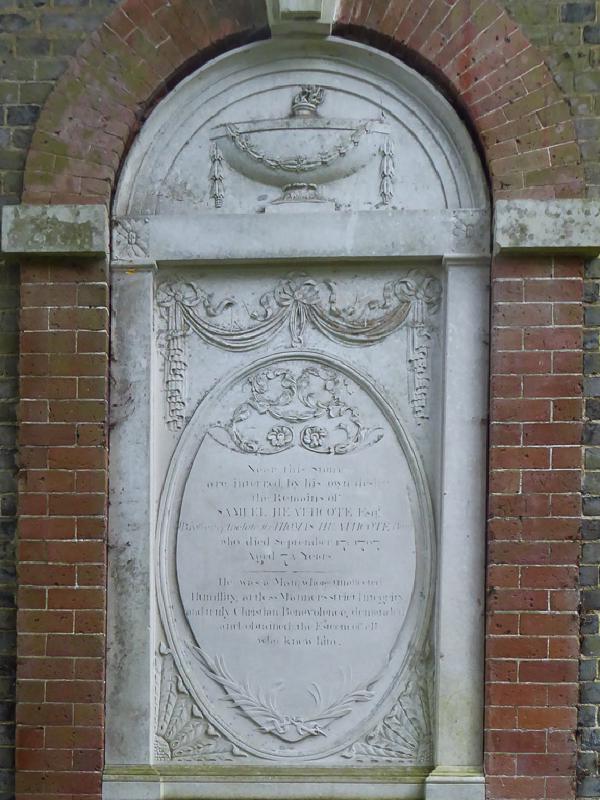
Despite having blogged about it here a week ago, I still failed miserably to sign up for any of the Heritage Open Day activities this weekend. We returned to Hursley this afternoon though for one that didn’t require booking. It’s a building that I’ve passed numerous times, generally en-route from work to the Dolphin pub in the village! It stands in the grounds of the church and is the mausoleum constructed by the Heathcote family (who built the main body of the current Hursley House) over 200 years ago.
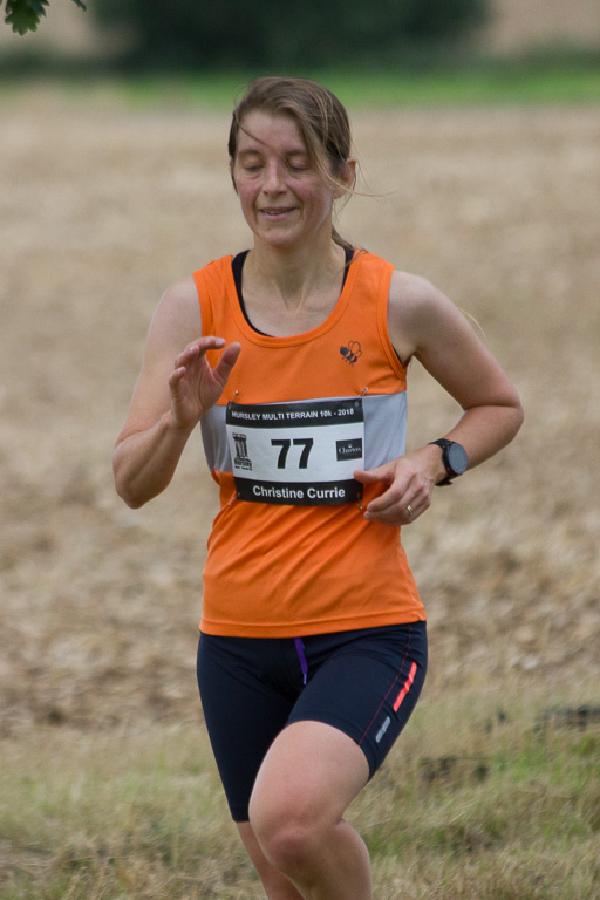
It was Christine’s turn to run the Hursley 10k this year so the rest of us went along to spectate (Emma is always keen when there’s prospect of a cake stall!). There was lots of Eastleigh Running Club orange out for us to cheer on. As you’d expect given the location, there were also a few IBMers although, looking at the results, I also failed to spot many I should have seen.
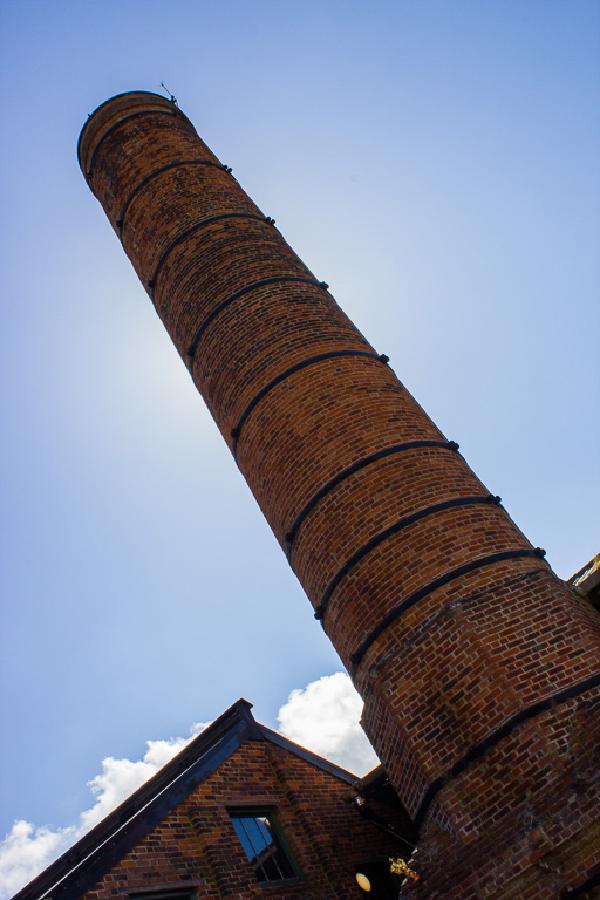
As part of this year’s Heritage Open Days we went along to Bursledon Brickworks (actually on the Swanwick side of the river for the pedants). We started with a ride on the narrow gauge railway although the particular specimen on show today wasn’t anything to write home about. We then went in search of one of the ‘heritage’ buses that was meant to be running to the windmill. There were several buses parked up in the courtyard but none moving and when I was asked whether I was ‘interested in buses’ we retreated to the brickworks itself.
This weekend we were signed up for a double-header of orienteering. On Saturday it was the British Sprint Champs at Bath University. We were there early as Christine’s parents were running the local parkrun and returning the children to us beforehand. The first-class sports facilities at the University made an excellent assembly area for the event. We had mixed fortunes in the heats. Christine and I made it through to the A finals but both the children were disqualified for wrong controls (it was a tricky area to plan easy courses on). Christine was fourth in her final and Duncan managed a first in his B final. I faired less well making one bad route choice through the multi-level section and losing my head completely on a later leg.